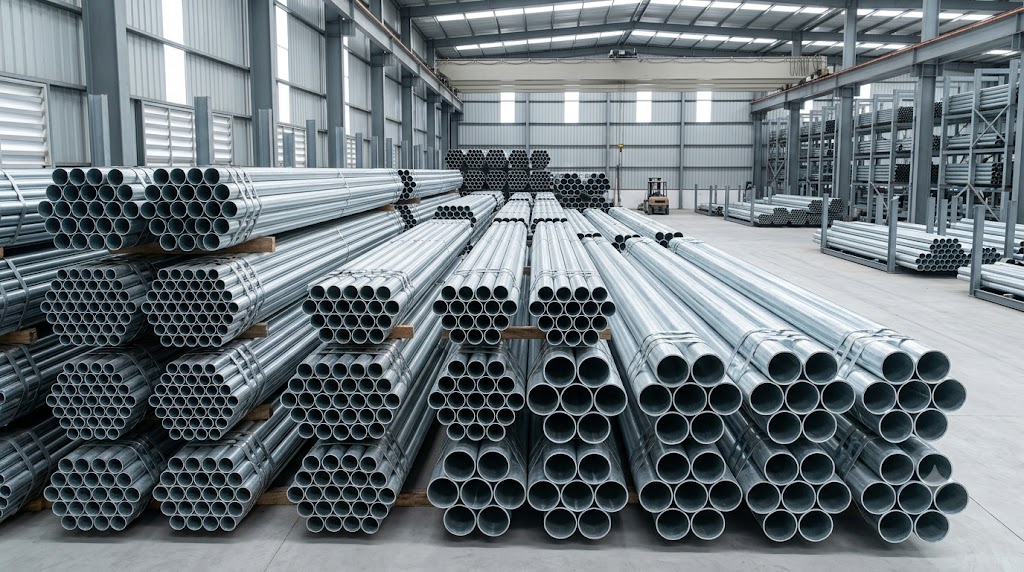

Steel pipe is sold by how it is made and how it is finished, and both decide where it belongs. The differences are not cosmetic.
How each one is made
MS ERW pipe
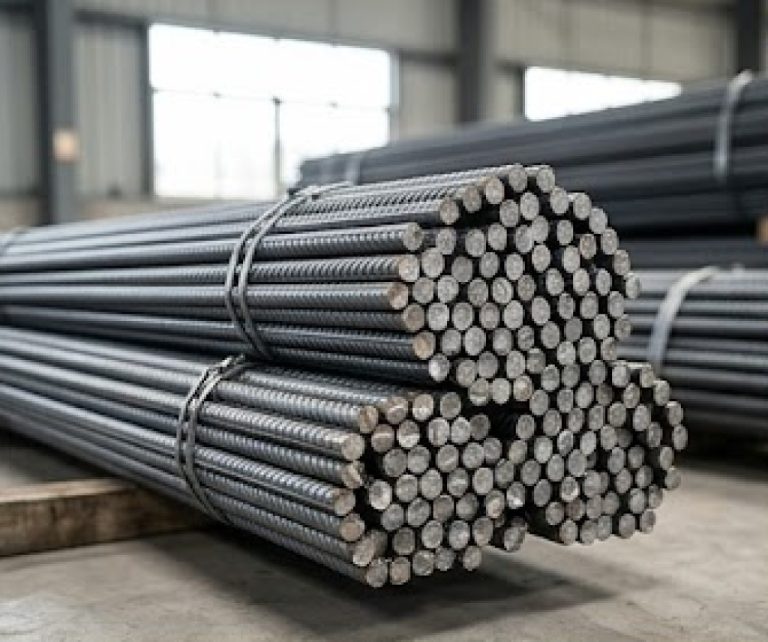
Mild steel strip is rolled into a tube and the seam is joined by electric resistance welding. The result is economical, dimensionally consistent and available in a wide size range. It is the default choice for structural work, railings, scaffolding and general fabrication.
GI pipe
The same ERW pipe, then hot-dip galvanised so a zinc layer bonds to the steel. Zinc corrodes in preference to the steel underneath, which is why a GI pipe survives in wet conditions where plain MS pipe would rust. This is the pipe for water lines and outdoor exposure.
Seamless pipe
Formed by piercing a solid billet rather than welding a strip, so there is no seam at all. With no weld line there is no weak axis, which is why seamless is specified for high pressure and critical service.
| Type | Seam | Corrosion resistance | Typical use |
|---|---|---|---|
| MS ERW | Welded | Bare steel | Structural, fabrication |
| GI | Welded | Zinc coated | Water lines, outdoor |
| Seamless | None | Bare steel | High pressure, process lines |
Choosing correctly
- Carrying water or exposed to weather, choose GI.
- Structural or fabrication duty under cover, MS ERW is sufficient.
- Pressure, steam or critical process service, specify seamless.
- Buried lines need a coating or wrap regardless of type.
Checks on delivery
- Confirm the wall thickness class, not just the nominal bore.
- On GI, look for even coating with no bare patches at the ends.
- Check straightness by sighting along the length.
- Verify the manufacturer marking and ask for the test certificate.
Threading and joining
Cutting a thread into GI pipe removes the zinc at exactly the point most exposed to water. Coat the cut threads before assembly, or the joint becomes the first place the line fails.
A practical note
Nominal bore describes the approximate internal diameter, not the outside. Two pipes of the same nominal bore in different classes will have different wall thicknesses and therefore different pressure ratings. Always confirm the class.
Matching pipe type to duty costs nothing at the ordering stage and saves the entire cost of redoing a line later.
Where the cost difference actually sits
Seamless pipe costs more than welded pipe because the manufacturing route is more involved, not because the steel is inherently superior. For a structural handrail that difference buys nothing. For a high-pressure line it buys the removal of the one feature most likely to fail. Deciding on duty rather than on price protects both the budget and the installation.
Galvanising adds cost too, and it is worth paying wherever moisture is present. In a dry, covered structural application it is money spent on protection the pipe will never need.
Support and spacing
Long horizontal runs need support at intervals appropriate to the pipe diameter and the weight of the contents. Undersupported lines sag, and sag creates low points where sediment collects and, in water lines, where residual water sits and corrodes from the inside.
Keeping records
Retain the test certificate and note the class and manufacturer for each line installed. When a section needs replacing years later, that record turns a guessing exercise into a straightforward reorder.